Machine Learning and AI in Cancer Prognosis, Prediction, and Treatment Selection: A Critical Approach
Cancer is a leading cause of morbidity and mortality worldwide. While progress has been made in the diagnosis, prognosis, and treatment of cancer patients, individualized and data-driven care remains a challenge. Artificial intelligence (AI), which is used to predict and automate many cancers, has emerged as a promising option for improving healthcare accuracy and patient outcomes. AI applications in oncology include risk assessment, early diagnosis, patient prognosis estimation, and treatment selection based on deep knowledge. Machine learning (ML), a subset of AI that enables computers to learn from training data, has been highly effective at predicting various types of cancer, including breast, brain, lung, liver, and prostate cancer. In fact, AI and ML have demonstrated greater accuracy in predicting cancer than clinicians. These technologies also have the potential to improve the diagnosis, prognosis, and quality of life of patients with various illnesses, not just cancer. Therefore, it is important to improve current AI and ML technologies and to develop new programs to benefit patients. This article examines the use of AI and ML algorithms in cancer prediction, including their current applications, limitations, and future prospects.
Lead Author: Bo Zhang
Share this Article with others
Press Release November 2025: Oracle and Ci4CC Partner to Accelerate Oncology Innovation Strategic collaboration to leverage Ci4CC’s national network and Oracle’s technology to help advance AI in oncology, EHR interoperability, next-gen clinical trials, and personalized medicine 24th Cancer Center Informatics Society Symposium - MIAMI BEACH, Florida – November 7, 2025 – Oracle Health and Life Sciences and the Cancer Center Informatics Society (Ci4CC), a nonprofit uniting cancer centers, researchers, and industry innovators, are collaborating to advance AI innovation in oncology care and research. The collaboration aims to bring together Oracle’s technology with Ci4CC’s Initiatives Program and national network of NCI-Designated and Community Care Cancer Centers. The two organizations plan to collaborate to design an EHR optimized for cancer care. “Cancer remains a leading cause of death worldwide, but AI and data science have become powerful allies in the fight,” said Seema Verma, executive vice president and general manager, Oracle Health and Life Sciences. “Combining Ci4CC’s unparalleled expertise and network with our state-of-the-art proven AI-powered healthcare applications, we have the opportunity to accelerate discoveries that can help cure cancer.” The strategic collaboration intends to develop initiatives across oncology care and clinical research. This includes integrating clinical and genomic data for personalized medicine solutions, pioneering AI-driven approaches for clinical trial innovation and drug development, establishing robust real-world evidence frameworks, and advancing precision oncology platforms. “This alliance with Oracle marks a significant milestone for Ci4CC and our mission to further cancer informatics,” said Sorena Nadaf-Rahrov, MS, MMI, PhDc, President & CEO - Cancer Center Informatics Society. “Advancements in cancer research and clinical care are not achieved in isolation. That’s why fostering such collaborative networks is fundamental to our Initiatives Program, and central to the Society’s mission. By integrating Oracle’s cutting-edge and AI-enabled technology with real-world data from our national network of NCI-Designated and Community Cancer Centers, we hope to incubate and operationalize initiatives that will redefine cancer research and patient care. Turning data into knowledge, and knowledge into health continues to drive the Cancer Center Informatics Society forward.” Oracle NewsRoom: https://www.oracle.com/news/announcement/oracle-and-ci4cc-partner-to-accelerate-oncology-innovation-2025-11-07/ PR Newswire: https://www.prnewswire.com/news-releases/oracle-and-ci4cc-partner-to-accelerate-oncology-innovation-302608712.html
Tool aims to solve the mystery of non-coding sequences — but is still in its infancy.
The Cancer Letter June 20th Issue
Cancer Center Informatics Society Working Group Announcement and Endorsement of the American Center for Cures
Caught in the crossfire: The critical threats facing cancer centers, research, and patient care. Shannon McWeeney PhD, & Sorena Nadaf-Rahrov MS, MMI
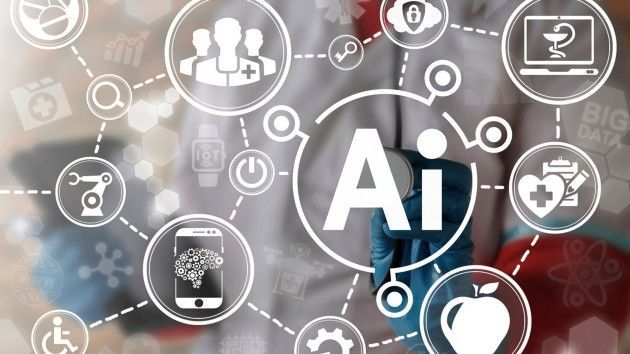
January 2025 Newsletter: The Year of Artificial Intelligence Sorena Nadaf-Rahrov, MS, MMI, PhDc
A recent Lancet study demonstrated that AI implementation led to a 29% increase in cancer detection, with no increase in false positives and a reduced workload compared to radiologists without AI assistance. While emerging evidence supports AI’s potential to enhance cancer detection in mammography screening and reduce screen-reading workload, further research is needed to fully understand its clinical impact.
Artificial intelligence to empower diagnosis of myelodysplastic syndromes by multiparametric flow cytometry

With heavy hearts, we remember and honor Brady Davis, whose sudden passing leaves an immense void. Brady was a devoted supporter and invaluable contributor to the Cancer Center Informatics Society, dedicating countless hours to advancing our mission and strengthening our community. His expertise, enthusiasm, and unwavering commitment shaped our initiatives and inspired everyone fortunate enough to work alongside him. Brady’s legacy will live on through the progress he championed and the connections he fostered. We extend our deepest sympathies to his family, friends, and all who knew him. He will be greatly missed. In honor of Brady’s legacy, Ci4CC will be forming a committee to explore meaningful ways to memorialize him within our society for years to come. We plan to announce the committee’s recommendations at our Spring Summit in San Diego, CA, on March 31, 2025. Please find his obituary here , and visit his memorial page on MyKeeper to leave a tribute. Support the Davis family in Brady’s memory via GoFundMe ---------- Cancer Center Informatics Society (Ci4CC) Sorena Nadaf-Rahrov & Warren Kibbe Co-Founders, Ci4CC
Nature Digital Medicine PRISM: Patient Records Interpretation for Semantic clinical trial Matching system using large language models